The Lost City of Atlantis
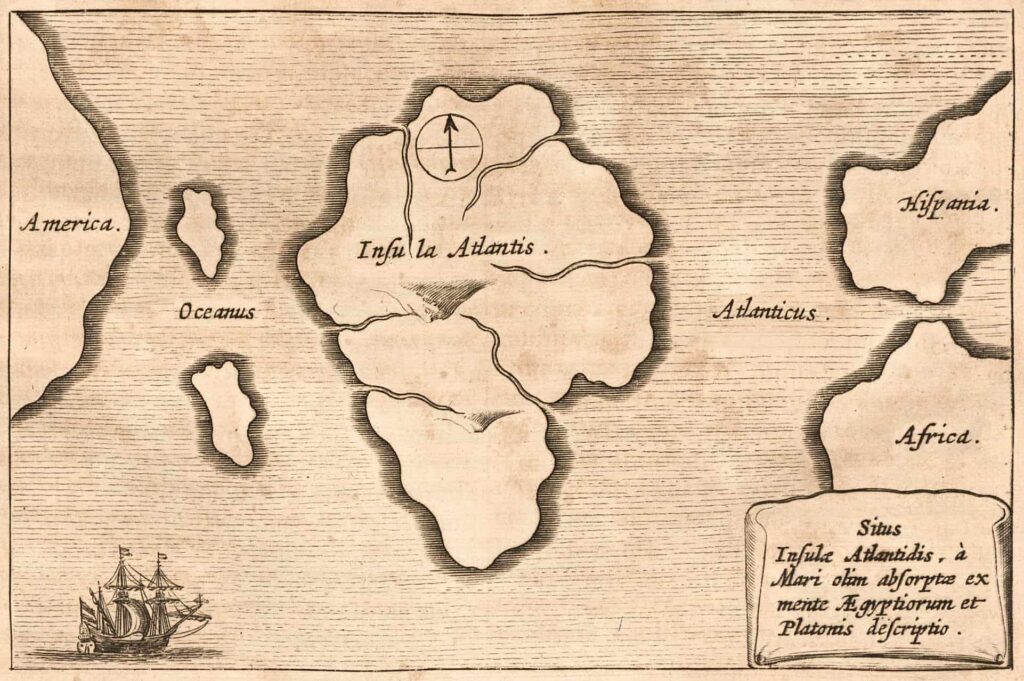
The mythological lost city of Atlantis has captivated the imaginations of historians, archaeologists, and writers for centuries. According to the ancient philosopher Plato, Atlantis was an advanced civilization that thrived long ago before meeting a cataclysmic end, sinking beneath the ocean waves in a single day and night of misfortune. Despite its detailed descriptions in Plato’s dialogues “Timaeus” and “Critias,” the precise location and even the existence of Atlantis continue to elude modern scholars and explorers.
Was Atlantis a real place, a thriving hub of ancient knowledge and technology, or merely a fictional allegory crafted by Plato to illustrate his philosophical ideas? This question has fueled countless debates and inspired numerous theories about its possible whereabouts. Some suggest it lies in the Mediterranean, others in the Caribbean, and some even propose locations as far-flung as Antarctica. These varied hypotheses have led to numerous expeditions, each driven by the tantalizing possibility of unearthing this legendary city.
The allure of Atlantis lies not just in its mystery but also in the grandeur of its purported achievements. Descriptions of grand architecture, advanced engineering, and a society flourishing with wealth and knowledge add to its mystique. Despite the lack of concrete evidence, the legend of Atlantis persists, capturing the hearts and minds of adventurers, dreamers, and scholars. The ongoing quest to find Atlantis symbolizes humanity’s enduring fascination with lost worlds and the possibility of discovering forgotten histories.
As expeditions continue and new technologies emerge, the search for Atlantis remains a poignant reminder of our intrinsic desire to uncover the unknown and explore the depths of our collective myths and legends.