The Great Pyramids of Giza

The Great Pyramids of Giza, towering above the Egyptian desert for over 4,500 years, continue to captivate and astound archaeologists and researchers worldwide. These monumental structures, particularly the Great Pyramid of Khufu, evoke a sense of awe and wonder not only due to their sheer size but also because of the incredible precision with which they were constructed. Despite countless studies and extensive research, the exact methods employed by the ancient Egyptians to achieve such architectural feats remain shrouded in mystery.
How did these ancient builders, without the aid of modern technology, manage to transport and assemble massive limestone blocks, some weighing as much as 80 tons, with such extraordinary accuracy? Theories abound, ranging from the use of simple tools and ramps to more complex methods involving levers and sleds. Yet, none have definitively solved the enigma, leaving historians and Egyptologists endlessly fascinated by the ingenuity and engineering prowess of these early architects.
Moreover, the interiors of these pyramids hold their own share of secrets. The intricately designed chambers and passageways, some still inaccessible or unexplored, pose questions about their purpose and the symbolism behind their construction. Were these inner sanctums solely intended as royal tombs, or did they serve additional ceremonial or astronomical functions? The precise alignment of the pyramids with celestial bodies further fuels speculation about the advanced knowledge of astronomy possessed by the ancient Egyptians.
Each discovery within the pyramids, whether a hidden chamber or an artifact, adds another layer to the complex puzzle of their origin and construction. As modern technology continues to evolve, perhaps one day the full story of the Great Pyramids of Giza will be revealed. Until then, these ancient wonders stand as enduring testaments to human ingenuity and the enduring allure of the unknown.
Stonehenge
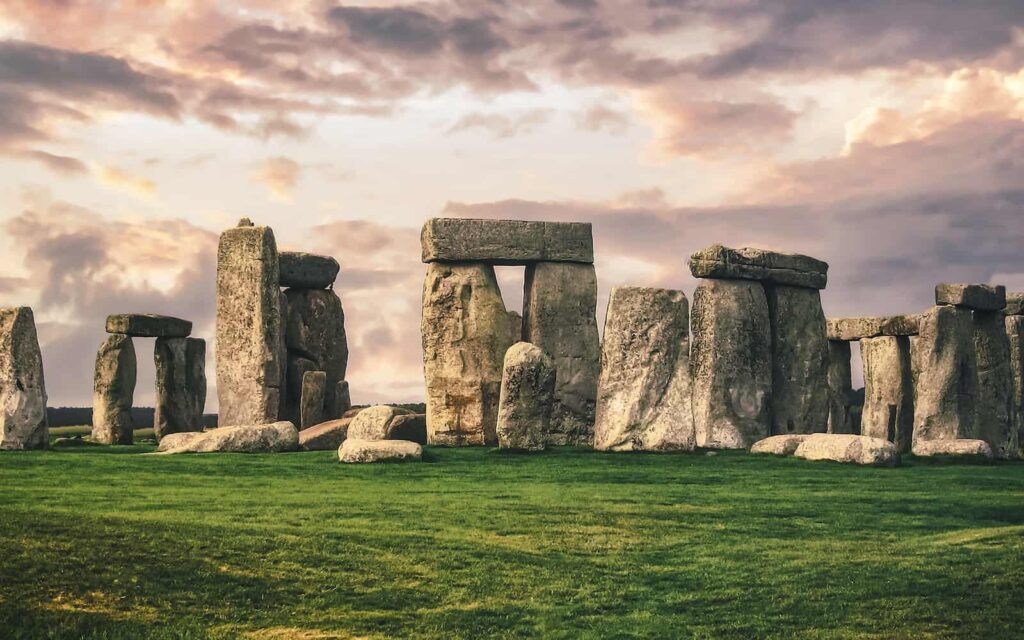
Stonehenge, situated on the rolling plains of Wiltshire, England, is one of the most enigmatic and iconic monuments of the ancient world. This prehistoric structure, composed of massive stone blocks meticulously arranged in a circular pattern, has captivated historians, archaeologists, and visitors alike for centuries. The sheer scale and precision of Stonehenge’s construction have led to numerous questions and theories about its origins and purpose.
The mystery surrounding Stonehenge begins with its construction. The enormous stones, some weighing up to 25 tons, were transported from distant quarries, with some believed to have been sourced from as far away as Wales, over 150 miles away. The exact methods used to move and erect these colossal stones, given the technological limitations of the time, remain a subject of intense debate and fascination.
Stonehenge’s purpose is equally shrouded in mystery. Some experts propose that it served as an astronomical observatory, with its alignment marking solstices and equinoxes, thus playing a role in ancient calendrical systems. Others suggest it was a sacred religious site, a place of worship and ritual for the druids or other ancient peoples. There is also evidence to support the theory that Stonehenge functioned as a burial ground, with numerous human remains discovered in the vicinity.
Despite extensive research and excavation, definitive answers about Stonehenge’s original function remain elusive. Each new discovery adds a piece to the puzzle, yet the complete picture continues to elude us, fueling endless debates and captivating the imagination of people around the world. The enduring mystery of Stonehenge serves as a testament to the ingenuity and spiritual depth of our ancestors, inviting us to ponder the complexities of their world and the legacies they left behind.
The Bermuda Triangle

The Bermuda Triangle, an enigmatic region in the western part of the North Atlantic Ocean, has captured the public’s imagination for decades due to its reputation for mysterious disappearances of ships and aircraft. Bounded by Miami, Bermuda, and Puerto Rico, this area has been the focal point of countless stories involving vessels and planes vanishing without a trace. Despite extensive research and numerous investigations, the precise causes behind these perplexing incidents remain speculative and controversial.
Natural explanations often cite the area’s unique environmental conditions. The Bermuda Triangle is prone to sudden and severe weather changes, including powerful thunderstorms, waterspouts, and hurricanes. Additionally, the region is situated along some of the world’s busiest shipping lanes, which increases the likelihood of navigational errors. Underwater features such as deep ocean trenches and methane hydrate eruptions from the seabed have also been proposed as contributing factors to these mysterious occurrences.
Conversely, some theories venture into the realm of the extraordinary, suggesting that extraterrestrial beings or paranormal activities are responsible for the disappearances. Stories of unidentified flying objects (UFOs) and time warps have fueled the imagination of conspiracy theorists and popular culture. The legend of the Bermuda Triangle continues to thrive in books, documentaries, and movies, perpetuating the aura of mystery surrounding this region.
Despite the ongoing intrigue and speculation, no definitive evidence has been found to support any single explanation for the phenomena. The mysteries of the Bermuda Triangle continue to puzzle experts and captivate the world, blending the allure of the unknown with the quest for understanding the complexities of our planet.
The Nazca Lines
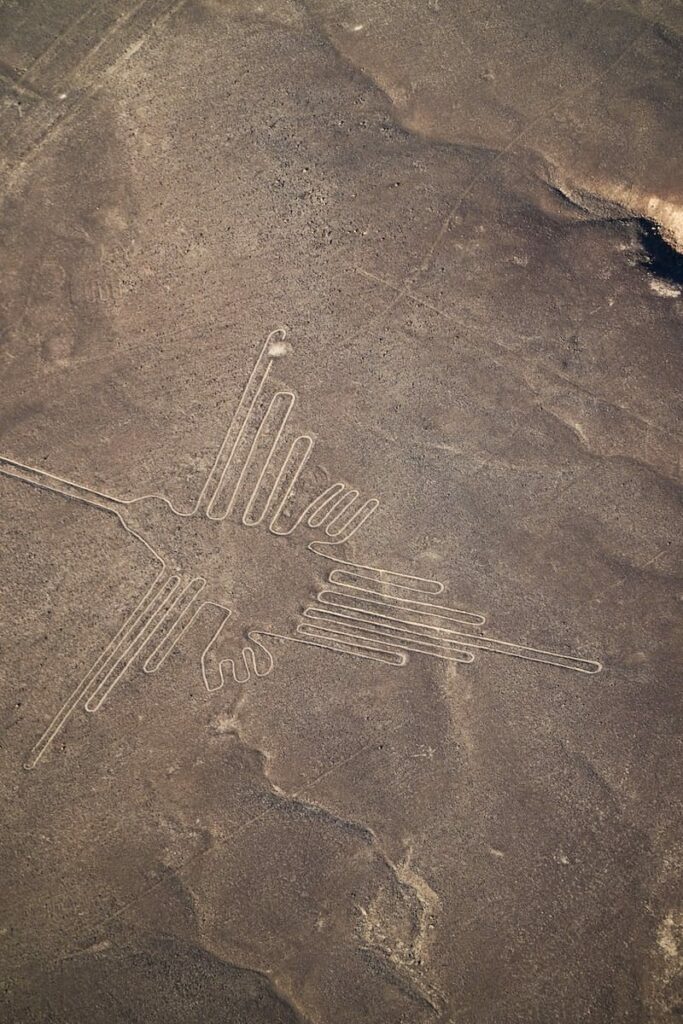
Etched into the arid desert floor of southern Peru, the Nazca Lines are an extraordinary collection of enormous geoglyphs that have captivated archaeologists and tourists alike for generations. These massive designs, which include a diverse array of animals, plants, and geometric shapes, span several kilometers across the Pampa de San José. Created by the ancient Nazca civilization between 500 BCE and 500 CE, the lines are an enduring testament to their ingenuity and artistic expression.
The Nazca Lines are not merely drawings but intricate works of art, meticulously crafted by removing the top layer of reddish pebbles to reveal the lighter soil underneath. This method has preserved the designs for over a millennium, allowing modern observers to marvel at their precision and scale. Some of the most famous figures include a hummingbird, a monkey, a spider, and even a figure believed to be an astronaut, among many others.
Despite extensive study, the purpose behind these colossal figures and the exact techniques employed to create them remain shrouded in mystery. Various theories have been proposed, ranging from astronomical calendars and religious rituals to markers for underground water sources. The enigma of the Nazca Lines fuels endless speculation about their significance and origin, making them one of the world’s greatest archaeological mysteries.
Adding to the intrigue, the geoglyphs are best viewed from the air, suggesting that the Nazca people might have had an advanced understanding of perspective or perhaps used hot air balloons or elevated platforms. This notion only deepens the fascination and allure of these ancient masterpieces.
In summary, the Nazca Lines are a profound and enigmatic legacy of the Nazca civilization, inviting ongoing exploration and wonder about their creation and purpose. Their enduring mystery continues to captivate and inspire curiosity across the globe.
The Lost City of Atlantis
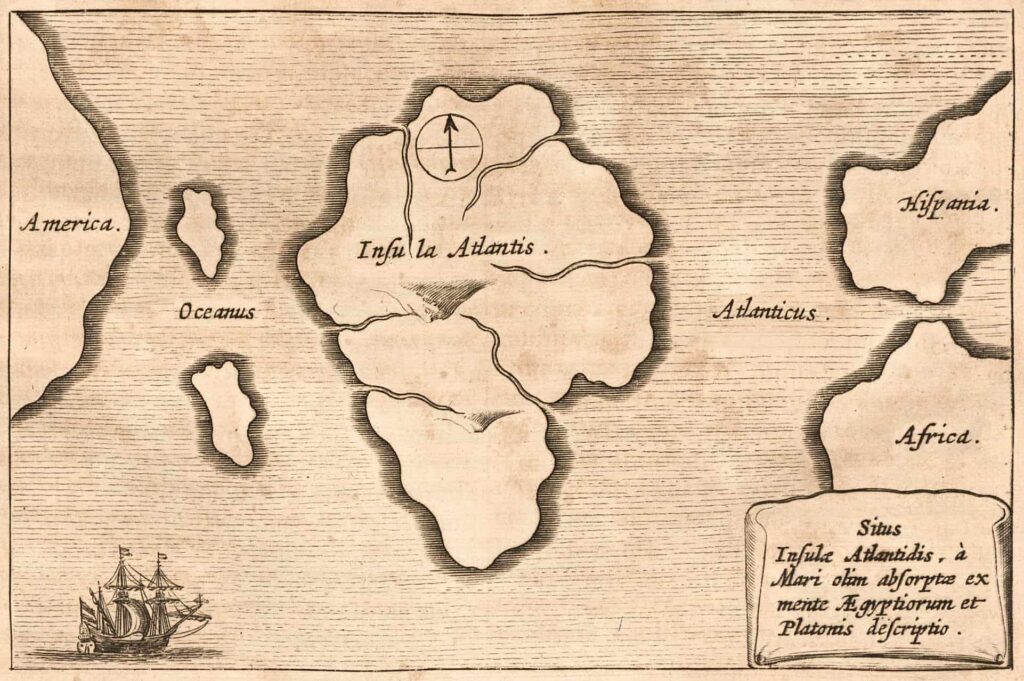
The mythological lost city of Atlantis has captivated the imaginations of historians, archaeologists, and writers for centuries. According to the ancient philosopher Plato, Atlantis was an advanced civilization that thrived long ago before meeting a cataclysmic end, sinking beneath the ocean waves in a single day and night of misfortune. Despite its detailed descriptions in Plato’s dialogues “Timaeus” and “Critias,” the precise location and even the existence of Atlantis continue to elude modern scholars and explorers.
Was Atlantis a real place, a thriving hub of ancient knowledge and technology, or merely a fictional allegory crafted by Plato to illustrate his philosophical ideas? This question has fueled countless debates and inspired numerous theories about its possible whereabouts. Some suggest it lies in the Mediterranean, others in the Caribbean, and some even propose locations as far-flung as Antarctica. These varied hypotheses have led to numerous expeditions, each driven by the tantalizing possibility of unearthing this legendary city.
The allure of Atlantis lies not just in its mystery but also in the grandeur of its purported achievements. Descriptions of grand architecture, advanced engineering, and a society flourishing with wealth and knowledge add to its mystique. Despite the lack of concrete evidence, the legend of Atlantis persists, capturing the hearts and minds of adventurers, dreamers, and scholars. The ongoing quest to find Atlantis symbolizes humanity’s enduring fascination with lost worlds and the possibility of discovering forgotten histories.
As expeditions continue and new technologies emerge, the search for Atlantis remains a poignant reminder of our intrinsic desire to uncover the unknown and explore the depths of our collective myths and legends.
The Voynich Manuscript

The Voynich Manuscript is a captivating and mysterious artifact, often regarded as one of the most perplexing enigmas in the world of ancient manuscripts. This illustrated codex, believed to date back to the 15th century, is written in an unknown script and language that has eluded decipherment for centuries. Despite the best efforts of some of the world’s most brilliant codebreakers, linguists, and cryptographers, the meaning and content of the Voynich Manuscript remain a mystery.
The manuscript’s pages are adorned with a series of bizarre and intricate illustrations that add to its mystique. These drawings include a vast array of plants, many of which do not correspond to any known species, astronomical diagrams that defy conventional understanding, and a plethora of unknown symbols and shapes that seem to follow no recognizable pattern. The manuscript’s art, with its whimsical and otherworldly depictions, provides an almost dreamlike quality, further intriguing researchers and enthusiasts.
Numerous theories have been proposed regarding the manuscript’s origins and purpose. Some speculate that it could be a herbal manual, an alchemical text, or even a coded work of pure invention. Others suggest that it may have been created as a hoax or as an attempt to produce a new, unbreakable code. Despite extensive study and advanced technological analysis, including the use of modern computational methods, the manuscript has resisted all attempts at translation and understanding.
The allure of the Voynich Manuscript lies not only in its undeciphered text but also in the profound sense of mystery it evokes. It serves as a testament to the enduring human fascination with the unknown and the limits of our understanding. As scholars continue to study this enigmatic codex, the Voynich Manuscript remains a tantalizing puzzle, inviting new generations to unlock its secrets.
The Loch Ness Monster

Deep within the mist-shrouded expanse of the Scottish Highlands lies the enigmatic Loch Ness, a vast and mysterious freshwater loch that has captivated the world’s imagination for centuries. This storied body of water is renowned not only for its breathtaking natural beauty but also for its association with one of the most famous cryptids in the world – the elusive Loch Ness Monster, affectionately known as “Nessie.”
Legends and tales of a mysterious, long-necked creature inhabiting the depths of Loch Ness have been passed down through generations, capturing the curiosity and wonder of people around the globe. The first modern sighting of Nessie was reported in the 1930s, sparking a fervent interest that has endured ever since. Theories and sightings abound, with countless individuals claiming to have seen glimpses of the elusive beast, often described as having a serpentine body and a series of humps breaking the water’s surface.
Despite numerous scientific investigations and extensive searches, conclusive evidence of Nessie’s existence remains frustratingly out of reach. Sophisticated sonar scans, underwater photography, and even DNA sampling have yet to provide definitive proof of the creature’s presence. Skeptics argue that many sightings can be attributed to misidentifications of common animals, floating debris, or even outright hoaxes. Nonetheless, the allure of the unknown continues to draw believers and adventurers to the shores of Loch Ness, each hoping to be the one to uncover the truth behind the legend.
The enduring mystery of the Loch Ness Monster adds a layer of intrigue to the already captivating landscape of Loch Ness. Whether viewed as a myth or a yet-to-be-discovered marvel, Nessie remains a symbol of the human fascination with the unknown, ensuring that the legend lives on, intriguing and inspiring curiosity for generations to come.
The Mary Celeste

The Mary Celeste, an American merchant ship discovered adrift and abandoned in the Atlantic Ocean in 1872, remains one of the most enduring and intriguing maritime mysteries to date. This ghostly vessel was found in a seemingly perfect state, with its cargo intact and ample provisions still on board, yet its crew had vanished without a trace, leaving behind personal belongings and the ship’s logbook. The sudden and inexplicable disappearance of the crew has sparked endless speculation and a plethora of theories over the years.
One popular theory suggests that the crew fell victim to a pirate attack, although no signs of struggle or plundering were evident on the ship. Another hypothesis posits that a violent storm or a waterspout could have forced the crew to abandon ship in a panic, but the lifeboat was never found, and the ship itself bore no damage consistent with such events. More fantastical explanations involve encounters with sea monsters or alien abductions, captivating the imagination yet lacking any empirical support.
Other theories delve into possible internal crises, such as mutiny or a sudden outbreak of illness, but again, no definitive evidence has surfaced to confirm these ideas. Some suggest that fumes from the alcohol cargo might have led to fears of an imminent explosion, prompting the crew to temporarily evacuate to the lifeboat, only to be lost at sea.
Despite extensive investigations and numerous proposed solutions, the fate of the Mary Celeste’s crew remains an enigma. The mystery of their disappearance continues to fascinate historians, maritime enthusiasts, and conspiracy theorists alike, ensuring that the legend of the Mary Celeste endures as one of the most perplexing and compelling maritime enigmas in history.
The Shroud of Turin

The Shroud of Turin is an ancient linen cloth that many believe bears the image of Jesus Christ. Measuring approximately 14 feet by 3.5 feet, this mysterious artifact has captured the imagination and devotion of millions. The faint, sepia-toned image on the shroud appears to depict a man who has suffered physical trauma consistent with crucifixion, including wounds that correspond to those described in the Gospels.
Despite extensive scientific investigations, the origins and authenticity of the shroud remain shrouded in mystery and controversy. Radiocarbon dating tests conducted in the late 1980s suggested that the shroud dates back to the medieval period, approximately between 1260 and 1390. These findings led some to conclude that it is an elaborate forgery. However, critics of the radiocarbon dating argue that the samples tested may have been contaminated or not representative of the whole cloth, thus skewing the results.
Further studies using advanced technology, such as microscopic and chemical analysis, have yielded conflicting results, only deepening the mystery. Some researchers have pointed to evidence of pollen and dust particles that they claim are consistent with the shroud’s origin in the Middle East, supporting the belief in its authenticity. Others have explored the possibility of the image being created by a form of ancient photography or by other unknown methods.
The enigmatic nature of the Shroud of Turin continues to captivate and divide opinion, intriguing both believers and skeptics alike. For some, it remains a sacred relic, a tangible connection to the divine. For others, it is a historical puzzle, a fascinating artifact that demands further investigation. Regardless of one’s perspective, the shroud endures as a powerful symbol of faith and mystery, inviting ongoing exploration and debate.
The Taos Hum

Nestled amidst the enchanting landscape of Taos, New Mexico, resides a perplexing phenomenon that has puzzled residents for decades: the enigmatic Taos Hum. This low-frequency humming sound, audible to select individuals while remaining elusive to others, has garnered attention and intrigue far beyond the confines of this quaint town. With no discernible source to pinpoint, the Taos Hum continues to mystify and confound those who hear its persistent drone.
Speculation surrounding the origins of the Taos Hum abounds, with theories ranging from geological anomalies to psychological phenomena. Some attribute the sound to the rumblings of subterranean movements, while others suggest it may be the result of atmospheric disturbances or electromagnetic interference. Despite the myriad explanations put forth by experts and enthusiasts alike, the true nature of the Taos Hum remains shrouded in uncertainty, adding to its allure and mystique.
For those who are sensitive to its presence, the Taos Hum can be a source of frustration and discomfort, disrupting their daily lives and robbing them of tranquility. Efforts to mitigate the effects of the phenomenon have proven largely futile, as its elusive nature defies conventional solutions. Yet, for others, the Taos Hum serves as a constant reminder of the mysteries that lie hidden within the fabric of our world, inspiring curiosity and wonder.
As the haunting drone of the Taos Hum persists, echoing through the streets and homes of this quaint town, it serves as a poignant reminder of the boundless mysteries that await discovery. Whether it is the product of natural forces or something more esoteric, the Taos Hum continues to captivate the imagination and fuel the quest for understanding in those who are touched by its elusive presence.
The Easter Island Moai

Located in the vast expanse of the Pacific Ocean, the remote island of Easter Island stands as a testament to the ingenuity and creativity of its indigenous inhabitants, the Rapa Nui people. Dotting its rugged landscape are the iconic Moai, towering stone statues that have captivated the imagination of visitors and researchers alike for centuries. Carved from solid rock and weighing several tons each, these monolithic figures stand as silent sentinels, bearing witness to a bygone era of human achievement and artistic prowess.
The process by which the Rapa Nui people carved, transported, and erected these colossal statues remains shrouded in mystery, confounding archaeologists and historians to this day. How were these massive stone monuments crafted using primitive tools? How were they transported across the island’s rugged terrain and erected in their designated locations? And what was the purpose behind their creation? These questions linger like whispers in the wind, fueling endless speculation and scholarly debate.
As visitors traverse the island’s rugged terrain, encountering the Moai in various states of preservation and restoration, they are enveloped in an aura of intrigue and wonder. Each statue bears unique facial features and expressions, hinting at the individuality of its creators and the cultural significance imbued within. The enigmatic presence of the Moai adds a layer of mystique to Easter Island, transforming it into a destination steeped in both natural beauty and archaeological intrigue.
In the heart of this remote and isolated island, amidst the haunting beauty of its volcanic landscapes and windswept shores, the mystery of the Easter Island Moai continues to beckon curious minds and adventurous spirits. It is a place where the echoes of the past reverberate through time, inviting visitors to delve into the enigmatic history of this captivating destination.
The Disappearance of Amelia Earhart

In the annals of aviation history, the enigmatic disappearance of pioneering aviator Amelia Earhart in 1937 remains one of the most enduring mysteries of the 20th century. Embarking on a daring quest to circumnavigate the globe, Earhart and her navigator Fred Noonan embarked on a journey that would captivate the world’s imagination and ultimately end in perplexing tragedy.
Despite exhaustive search efforts spanning vast expanses of ocean and rugged terrain, neither Earhart’s aircraft nor any sign of her remains were ever recovered. The circumstances surrounding her disappearance have fueled a plethora of conjectures and theories, ranging from the possibility of crash landings on remote islands to the haunting specter of capture by Japanese forces amidst the escalating tensions of the era.
Decades have passed since that fateful day, yet the veil of uncertainty shrouding Earhart’s fate remains largely intact, leaving her final resting place and the events leading to her disappearance relegated to the realm of speculation. Nevertheless, the enduring allure of Earhart’s pioneering spirit and indomitable courage continues to inspire generations of adventurers and explorers to push the boundaries of human endeavor and unravel the mysteries of the unknown.
Her legacy serves as a poignant reminder of the boundless potential of the human spirit and the relentless pursuit of dreams, even in the face of adversity and uncertainty. As the passage of time fails to dim the radiance of her legacy, Amelia Earhart stands as a beacon of inspiration, her story a testament to the enduring power of the human quest for discovery and the unyielding spirit of exploration.
The Zodiac Killer

In the tumultuous era of the late 1960s and early 1970s, the San Francisco Bay Area was gripped by fear and paranoia as a shadowy figure known as the Zodiac Killer unleashed a reign of terror upon the unsuspecting populace. Through a series of chilling murders and cryptic missives sent to local newspapers, the Zodiac Killer struck fear into the hearts of residents, leaving a trail of unanswered questions and unsolved mysteries in his wake.
Despite the exhaustive efforts of law enforcement agencies and amateur sleuths alike, the true identity of the Zodiac Killer remains shrouded in secrecy and speculation. Countless theories and suspects have emerged over the years, but none have been able to definitively unmask the enigmatic figure behind the killings.
Adding to the intrigue surrounding the case are the cryptic ciphers and coded messages sent by the Zodiac Killer to the press, taunting authorities and challenging the public to decipher his twisted riddles. Despite numerous attempts by codebreakers and cryptologists, many of these messages have remained stubbornly resistant to decryption, fueling speculation and fascination with the case.
The enduring mystery of the Zodiac Killer continues to captivate the public imagination, inspiring countless books, documentaries, and films exploring the chilling saga of one of America’s most notorious serial killers. As the decades pass and the case grows colder, the elusive identity of the Zodiac Killer remains one of the greatest unsolved mysteries in criminal history, leaving a haunting legacy that continues to haunt the collective psyche of the nation.
The Wow! Signal

In the annals of space exploration, a remarkable event unfolded in 1977 that continues to captivate the imaginations of scientists and enthusiasts alike. Astronomer Jerry Ehman, engrossed in the pioneering work of the SETI (Search for Extraterrestrial Intelligence) project, stumbled upon an enigmatic radio signal that defied conventional explanation. Lasting a mere 72 seconds, the signal, affectionately dubbed the “Wow! Signal” for Ehman’s astonished reaction upon its detection, emanated from a region of space beyond our solar system.
What makes the Wow! Signal truly extraordinary is its solitary occurrence; despite decades of diligent monitoring and exploration, it has never been detected again. This inexplicable absence, coupled with the signal’s robust intensity and unmistakable structure, has fueled speculation and debate among scientists regarding its origin and potential significance.
Could the Wow! Signal be a fleeting transmission from an extraterrestrial civilization, a deliberate attempt at interstellar communication across the vast expanse of space? Or does it represent a natural phenomenon, as yet undiscovered, that defies our current understanding of the cosmos? These questions linger unanswered, shrouding the Wow! Signal in an aura of mystery and intrigue that persists to this day.
As humanity continues its quest to unravel the mysteries of the universe and search for signs of intelligent life beyond our planet, the Wow! Signal stands as a tantalizing beacon, a tantalizing glimpse into the boundless possibilities that await discovery among the stars. Its legacy endures as a testament to the enduring spirit of exploration and the insatiable curiosity that drives us ever onward in our quest to unlock the secrets of the cosmos.
The Tunguska Event

In the annals of cosmic mysteries, one event stands out with particular intrigue: the Tunguska Event of 1908. In a remote and scarcely populated region of Siberia, a cataclysmic explosion rocked the landscape, unleashing devastation on an unprecedented scale. The force of the blast flattened trees over an area of more than 2,000 square kilometers, while seismic vibrations reverberated across the earth, registering with the intensity of a significant earthquake.
Yet, despite over a century of scientific inquiry, the true cause of the Tunguska Event remains shrouded in uncertainty. A multitude of theories have been proposed, each offering its own tantalizing speculation on the origins of this cosmic conundrum. Some contend that a meteorite impact was responsible for the explosion, citing evidence of extraterrestrial debris found at the site. Others have ventured into the realm of the extraordinary, positing scenarios involving the collision with a miniature black hole or even an encounter with unidentified flying objects (UFOs).
As scientists and astronomers continue to grapple with the enigmatic puzzle of the Tunguska Event, the allure of cosmic mysteries only deepens. The sheer magnitude of the explosion, coupled with the absence of a definitive explanation, serves as a stark reminder of the boundless power and unfathomable complexity of the universe. Indeed, the Tunguska Event stands as a testament to the enduring enigma of cosmic phenomena, inviting us to ponder the mysteries that lie beyond the confines of our earthly realm.
The Disappearance of Flight MH370

In the annals of modern aviation history, one enigmatic event stands out with haunting persistence: the inexplicable disappearance of Malaysia Airlines Flight MH370 in 2014. Departing from Kuala Lumpur bound for Beijing with 239 souls aboard, the flight vanished without a trace, leaving behind a bewildered world and a myriad of unanswered questions. Despite exhaustive search efforts spanning vast expanses of oceanic terrain, the elusive wreckage of the aircraft has eluded detection, shrouding the fate of MH370 in an unsettling veil of uncertainty.
In the wake of its disappearance, Flight MH370 has become the subject of intense scrutiny and speculation, igniting a global fascination with the mystery surrounding its demise. Theories abound, ranging from mechanical malfunctions and catastrophic failures to deliberate acts of sabotage or hijacking, each offering a glimpse into the complexities and vulnerabilities of modern aviation.
Yet, amidst the cacophony of conjecture and hypothesis, one undeniable truth remains: the enduring mystery of Flight MH370 serves as a poignant reminder of the profound challenges and inherent risks inherent in the realm of air travel. As investigators continue to grapple with the enigma of its disappearance, the saga of MH370 endures as a somber testament to the fragility of human existence and the boundless depths of the unknown.
The Dyatlov Pass Incident

In the annals of wilderness exploration, few tales evoke as much intrigue and speculation as the enigmatic Dyatlov Pass Incident of 1959. It was then that a group of seasoned hikers embarked on a fateful journey into the remote reaches of the Ural Mountains in Russia, only to vanish without a trace. Weeks later, their bodies were discovered under circumstances as baffling as they were disturbing.
The hikers’ final resting place revealed a scene of inexplicable horror: their tent, torn open from within, lay abandoned amidst the frigid wilderness, while their lifeless forms bore the telltale marks of inexplicable injuries. To this day, the exact circumstances of their demise remain shrouded in mystery, fueling a plethora of theories and conjectures.
Some speculate that the tragedy was the result of a sudden avalanche, burying the unfortunate souls beneath a cascade of snow and ice. Others point to the possibility of military intervention, citing the proximity of top-secret installations in the region. And then there are those who entertain more outlandish explanations, invoking the specter of supernatural forces lurking amidst the desolate landscape.
Despite decades of investigation and analysis, the truth behind the Dyatlov Pass Incident continues to elude researchers and amateur sleuths alike. Theories abound, but definitive answers remain elusive, leaving behind a haunting legacy that serves as a chilling reminder of the unforgiving power of nature and the mysteries that lie hidden within its depths.
The Identity of Jack the Ripper

In the annals of criminal history, few figures loom as large as Jack the Ripper, the infamous serial killer who cast a shadow of fear over the streets of late 19th century London. With a chilling penchant for targeting and gruesomely mutilating prostitutes, Jack the Ripper struck terror into the hearts of the city’s residents and confounded authorities with his brazen acts of violence.
Despite exhaustive investigations and the interrogation of numerous suspects, the true identity of Jack the Ripper remains shrouded in mystery. The case has become a labyrinth of speculation and conjecture, with countless theories emerging over the years in an attempt to unravel the enigma surrounding the killer’s motivations and background. From deranged lunatics to members of the aristocracy, the list of potential suspects has only served to deepen the intrigue surrounding the case.
Indeed, the legend of Jack the Ripper has transcended time, captivating the imaginations of true crime enthusiasts and historians alike. His reign of terror, brief though it may have been, has left an indelible mark on the collective consciousness, becoming synonymous with the darkest depths of human depravity.
As the decades have passed and the echoes of Jack the Ripper’s heinous deeds have faded into history, the quest for answers continues unabated. With each new revelation and discovery, the allure of the case only grows stronger, ensuring that the name Jack the Ripper will forever be synonymous with mystery, intrigue, and the enduring fascination of the human psyche.